

Aliplast, a leading producer of aluminium profiles for windows and doors, conservatories, pergolas and façade cladding, continues to strengthen its pioneering role in sustainability with a wide range of initiatives that contribute to a circular economy and a greener future.
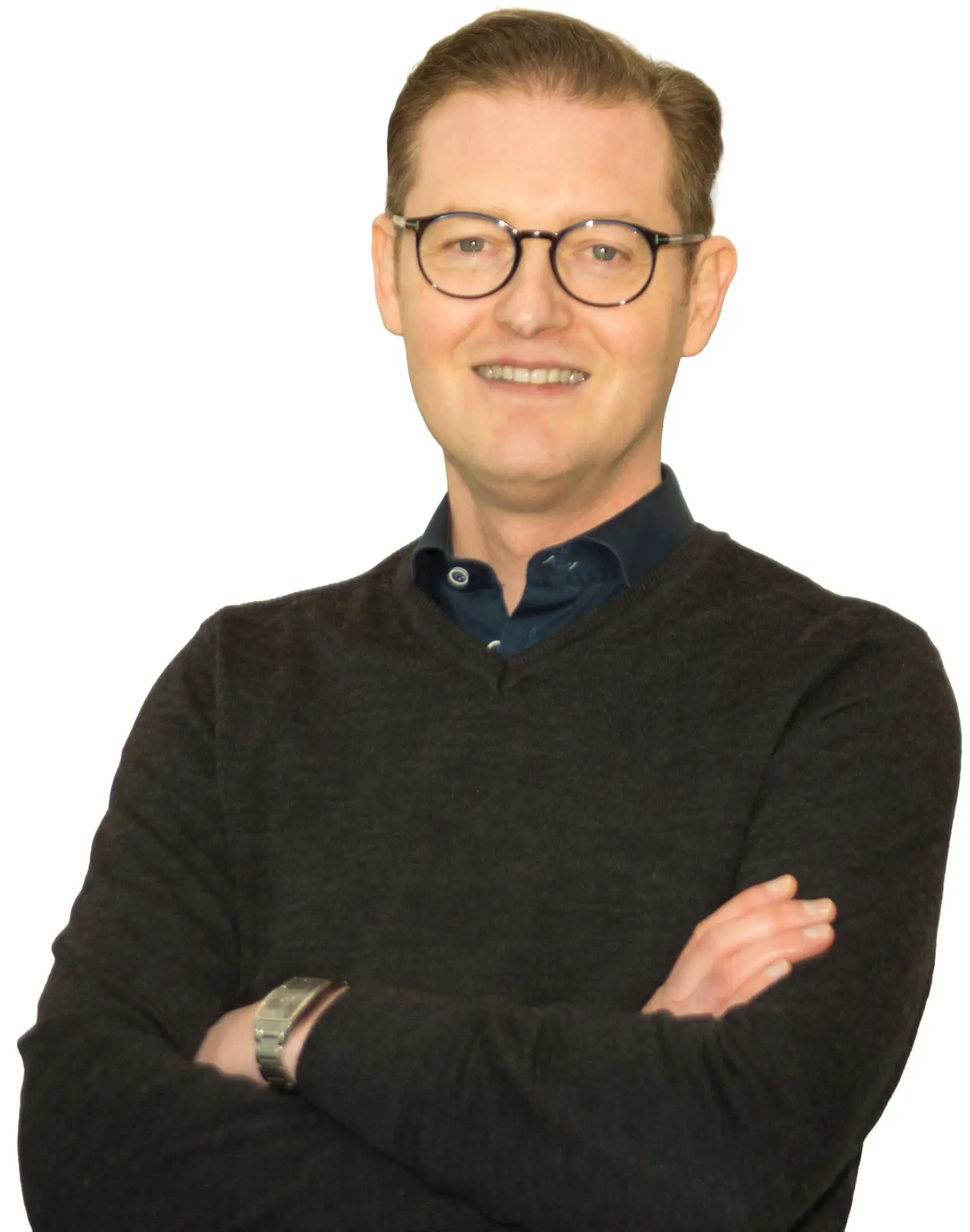
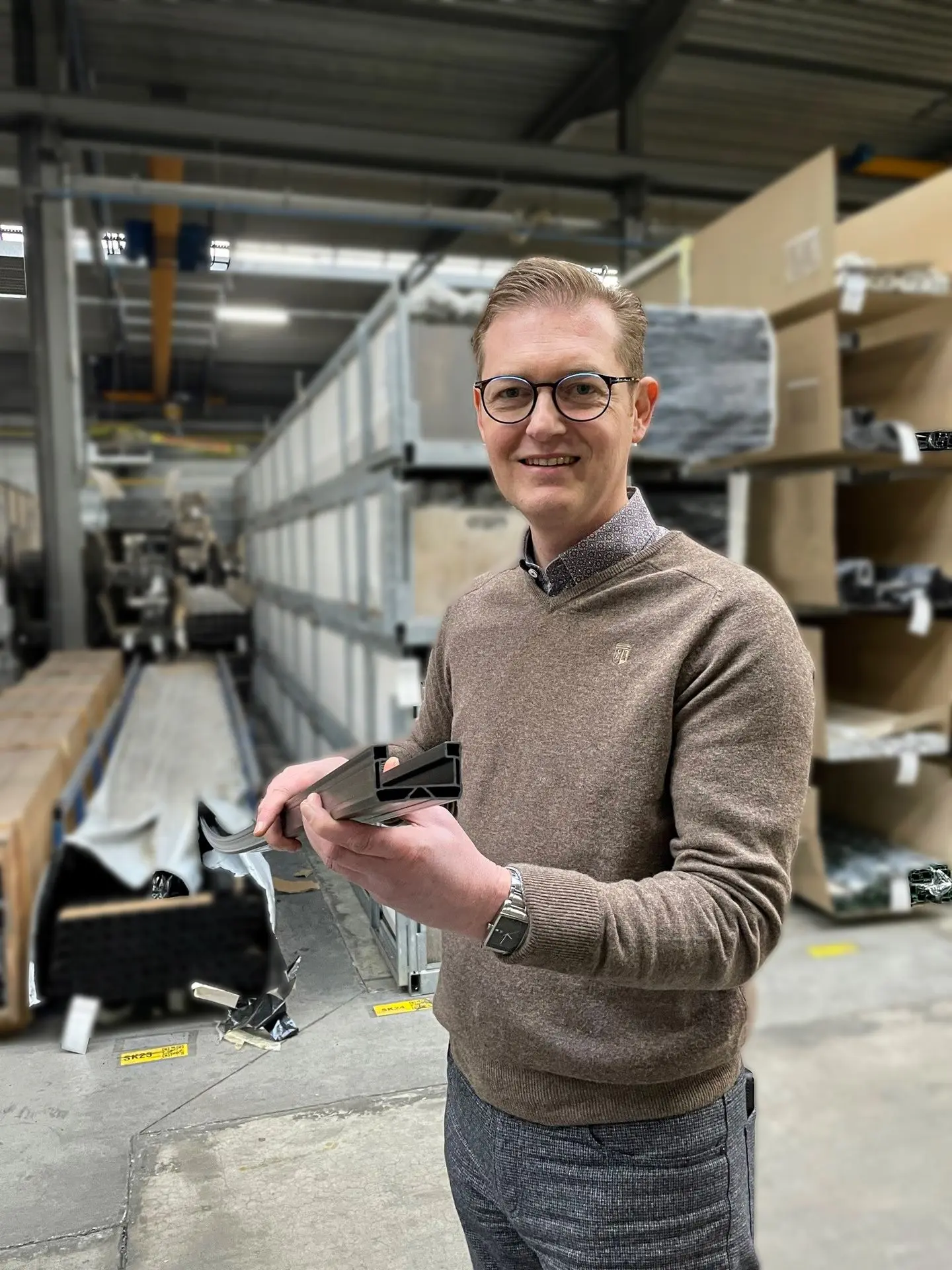
Ruben Snurawa, Quality and ESG Manager at Aliplast, explains: “For us, sustainability is not a single concept, but a combination of multiple qualities. It goes far beyond simply wanting to reduce our emissions. We aim to achieve the maximum, striving throughout the entire production process to focus on circularity, reducing CO₂ emissions, responsible energy consumption, and more.”
Product circularity
Aluminium is an ideal material for circular construction. It is produced from the natural raw material bauxite ore, which is abundantly available. Once extracted and refined, it can be rolled, cast or extruded. Aluminium is 100% infinitely recyclable without any loss of quality.
Aliplast applies the principles of vertical integration. Everything takes place under one roof: research and development, extrusion of billets, powder coating, insulation and packaging. Because we control the entire production process ourselves, we can more easily perform lifecycle analyses of our products and further optimise them.
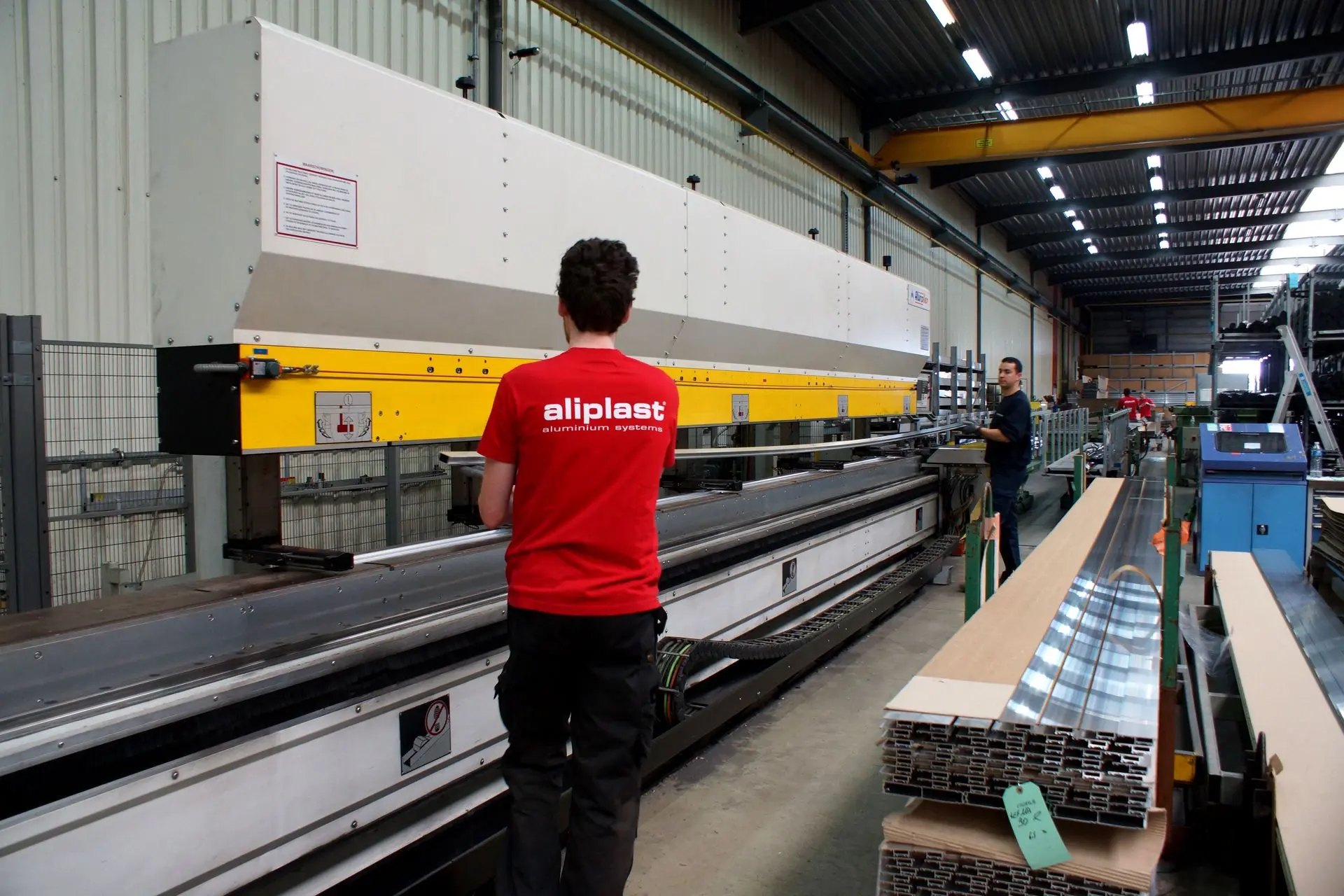
Extrusion
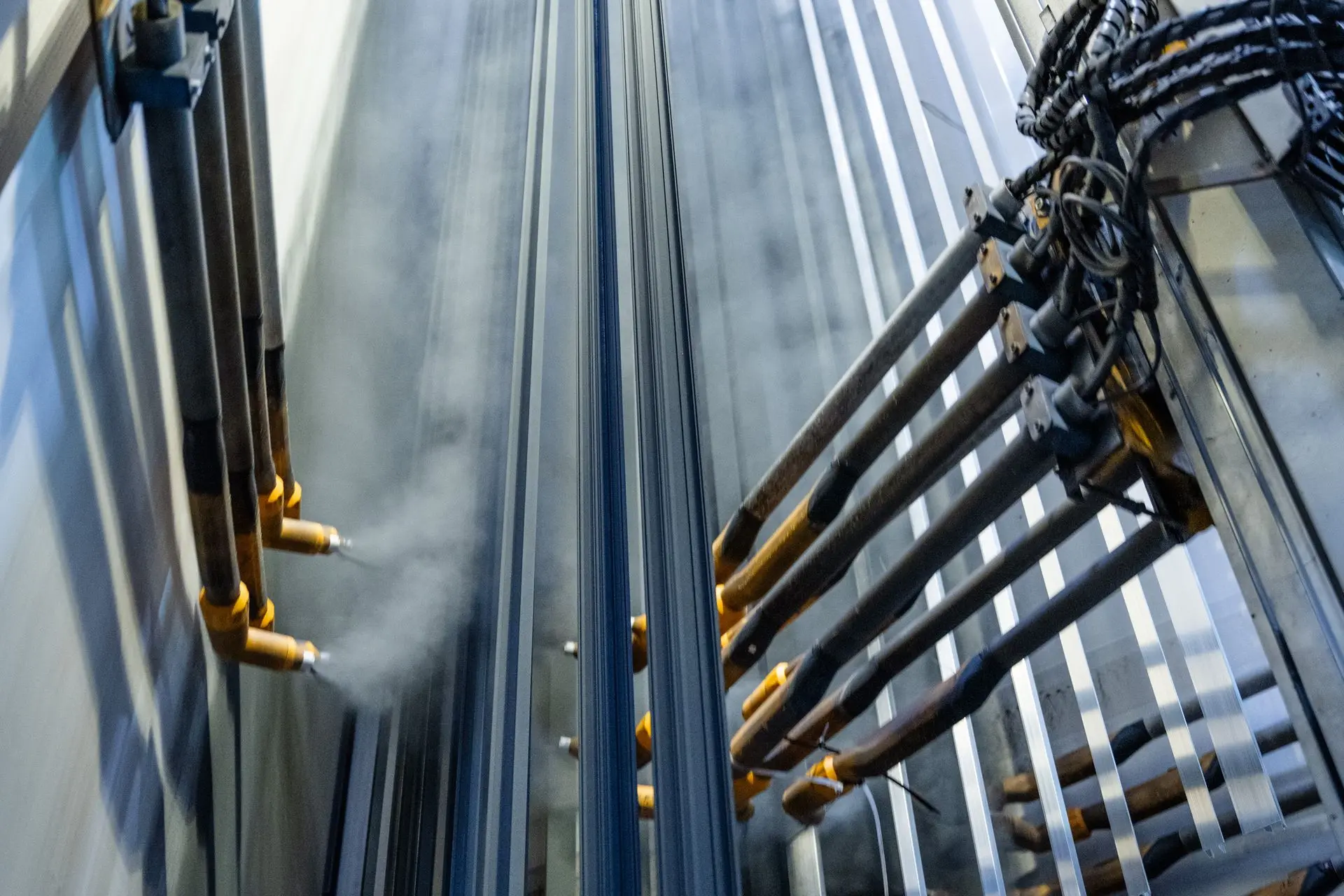
Cosating
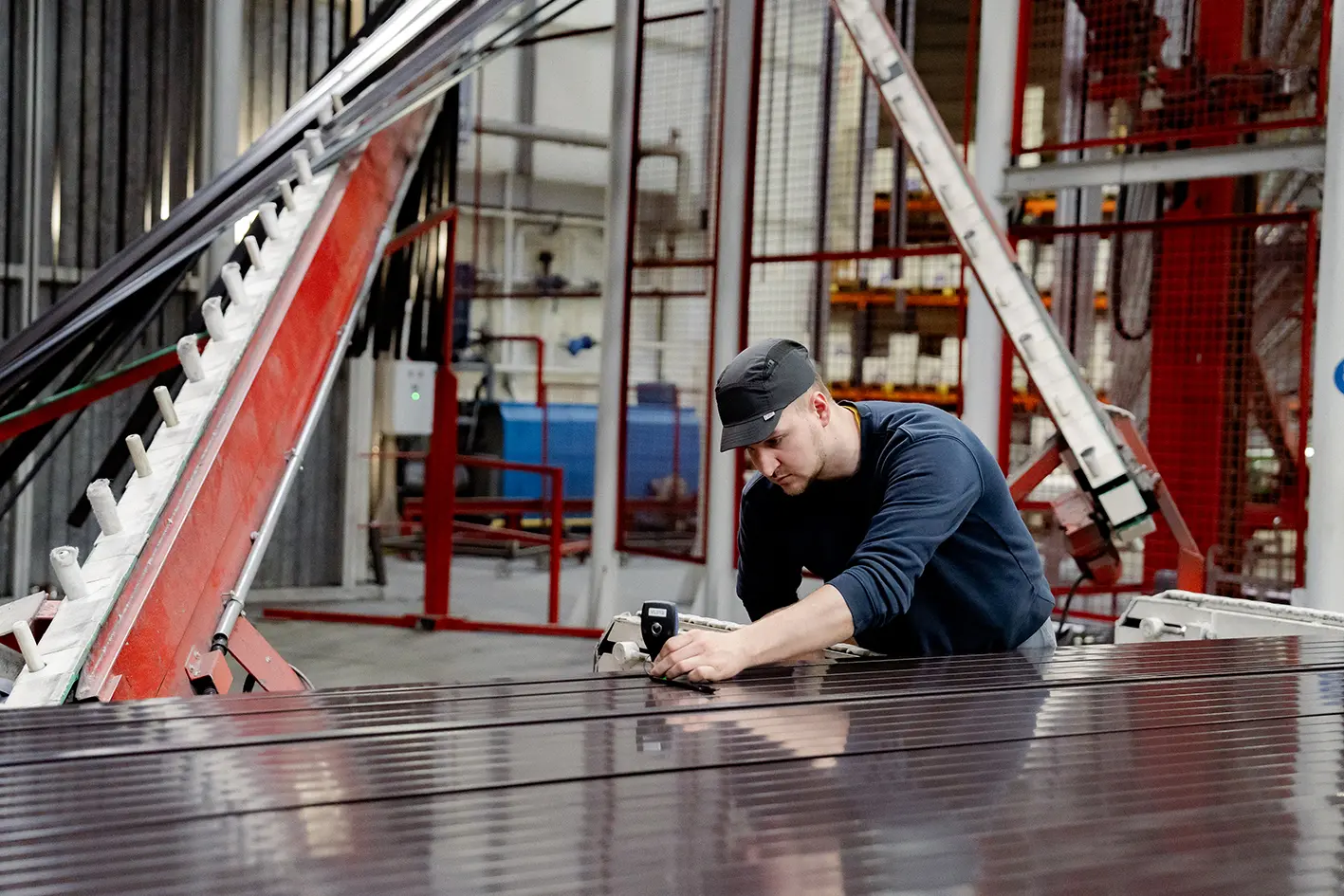
Quality control
We remelt the process scrap from our extruded aluminium profiles to produce new billets. These billets are then used for manufacturing our system profiles. Remelting aluminium process scrap requires only 5% of the energy needed for primary aluminium production.
For certain projects, we use Low Carbon Billets. These can either be billets with a high percentage of recycled material or billets produced using green energy. This makes it easier for buildings to achieve a BREEAM certification.

“A new initiative is AluLoop,” Ruben explains. “Aliplast introduced this concept to its partner distributors: together with our partners, we are building a circular future!”
AluLoop is a new concept designed to give aluminium a second life.
How does it work?
- A scrap dealer collects aluminium scrap from participating partners.
- This scrap is remelted into high quality low carbon billets.
- We then repurchase these billets to extrude and manufacture new aluminium profiles.
We are particularly pleased to see that many of our distributors are enthusiastic about this new concept and have already signed up. With AluLoop, we close the loop and reduce our ecological footprint. Together, we make a difference!
Ecological initiatives throughout the entire production process
Ruben adds: “Aluminium is naturally a sustainable material, but at Aliplast we always go one step further. At every stage of our production process, we ensure the implementation of environmentally friendly initiatives so that our systems are not only strong and aesthetically appealing, but also contribute to a greener future. Below, we highlight some of our initiatives.”
Efficient energy management
We undertake numerous initiatives to manage our gas and electricity consumption as efficiently as possible: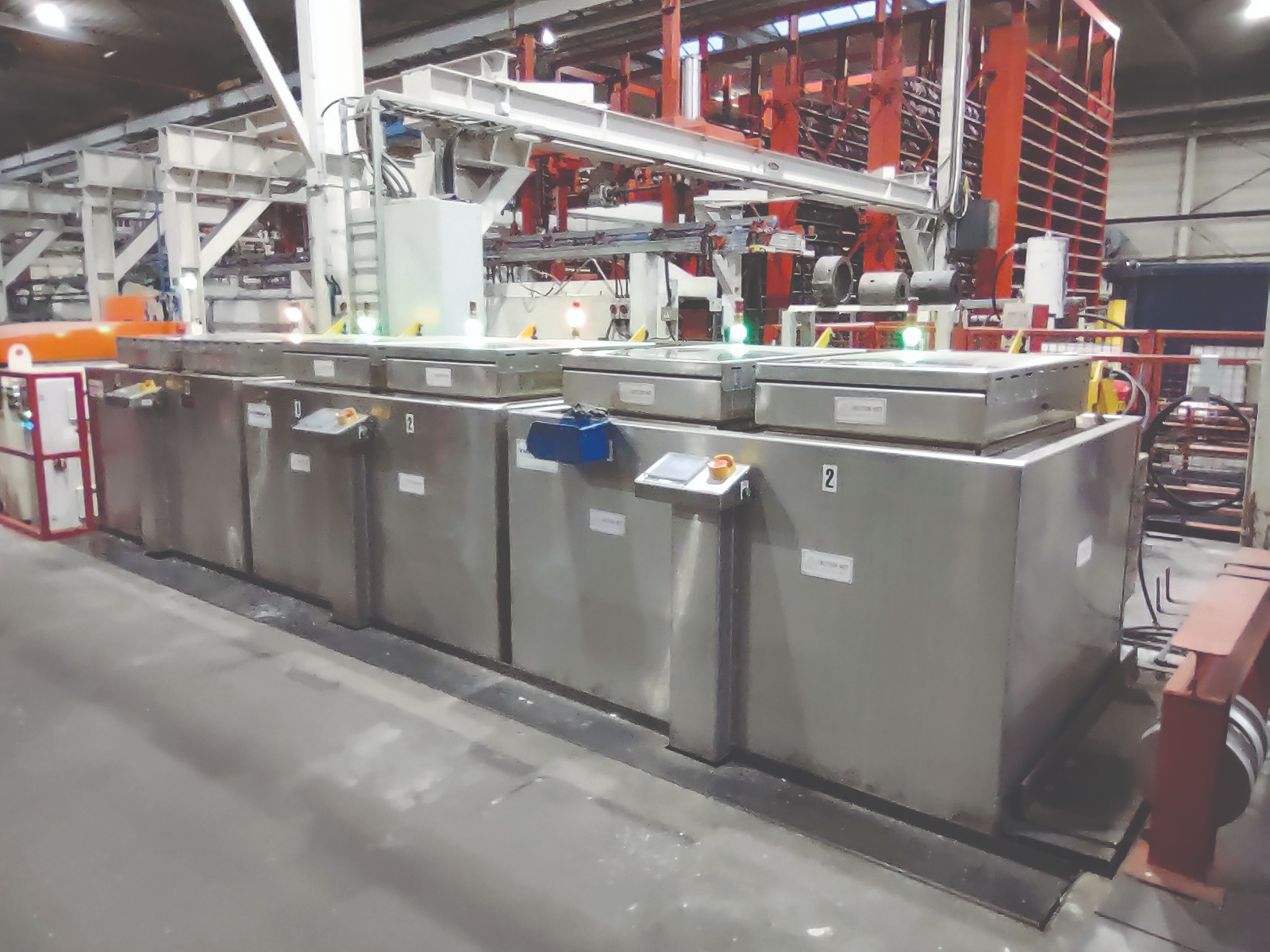
- During the extrusion of our profiles, the dies must be sufficiently preheated before being placed in the press. We have invested in modern IR die ovens, reducing our electricity consumption by 108,500 kWh per year. This corresponds to the average annual electricity use of 30 households.
- To reduce natural gas consumption, Aliplast replaced its billet furnace, resulting in an annual reduction of 296,000 kWh of gas, equivalent to the average yearly gas consumption of 16 households.
- Aliplast generates sustainable energy from 5,400 solar panels with a total capacity of approximately 1,600,000 kWh of green electricity per year, saving 664 tonnes of CO². In addition to our own green energy production, we purchase only certified green electricity. This means we use 100% green electricity. Moreover, the CO² emissions from the gas we consume for the production of our C2C certified systems are fully offset.
Additional investments in solar panels and battery storage are planned for 2026!
Innovative ideas for reducing water consumption
We have made significant investments in our powder coating lines to reduce water consumption by a factor of four. How? By combining the water treatment systems for our coating lines, we were able to drastically lower overall usage.
Aliplast has also optimised its vertical pre treatment line to further reduce water consumption. Traditional cleaning and etching zones typically require large amounts of water. Thanks to the redesigned tunnel structure and the implementation of a new type of cleaning and etching process, we have reduced water consumption by 64%. In this sustainable system, water is optimally recycled instead of using fresh water each time.
Extensive shift to electric transport
Already 89% of our internal transport is electric. Of our 27 forklifts, 26 are electric. Each new electric forklift results in an annual reduction of 16 tonnes of CO². Our transport partner has also invested in increasingly greener trucks in recent years, ensuring that all trucks delivering to our customers comply with the EURO 6 emission standard. We even have a first: we have just put our very first fully electric truck into operation.
Reusable packaging materials
We use metal containers for delivering our profiles. No disposable materials, but metal storage racks in which we transport the profiles to our customers — and which are returned to us once emptied. This relieves both our customers and ourselves from unnecessary packaging waste.
An important factor in reducing our CO² footprint is the choice of packaging materials. For this, we rely on trusted partners such as Abriso Jiffy, who supply Ocean Green protective material, which consists of up to 100% recycled material and is again 100% recyclable. To ensure that these high quality products reach construction sites undamaged, they are packaged using certified Ocean Green materials.
 Cradle to Cradle
Thanks to the extensive ecological efforts initiated by Aliplast, we have received a C2C (Cradle to Cradle) certificate for several of our aluminium systems. Cradle to Cradle Certified™ is a globally recognised benchmark for products that are designed to be safer and more sustainable, with a strong focus on supporting the circular economy.
 EcoVadis
Platinum
EcoVadis
Platinum
EcoVadis is a globally recognised platform that assesses companies on their sustainability and ESG performance (Environmental, Social and Governance). Sustainability efforts are evaluated across four key areas: environment, labour and human rights, ethics and sustainable procurement.
Corialis, the group to which Aliplast belongs, has earned a Platinum EcoVadis medal with a score of 84/100 thanks to its strong commitment to sustainability. This places us among the top 5% of best performing companies worldwide, and even within the top 1% of our industry sector.
Ruben concludes: “The path towards sustainability is constantly evolving and marked by challenges that demand ongoing innovation and resilience. Only by remaining steadfast in our commitment — knowing that every effort counts, no matter how small — can we contribute to a more sustainable future. Sustainability is not an individual effort; it is a collective commitment. Together, we can build a greener, more resilient and more prosperous world.”