

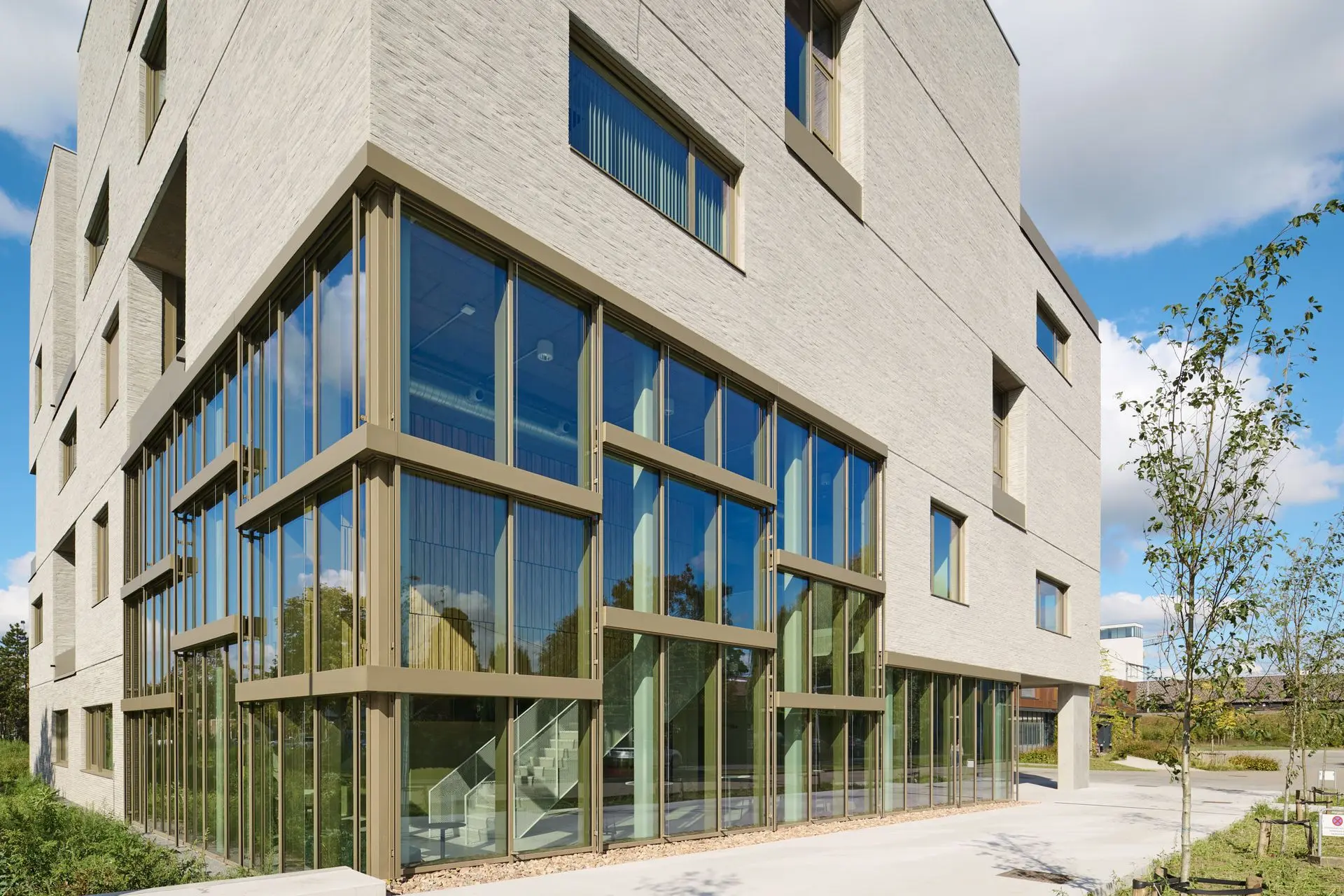
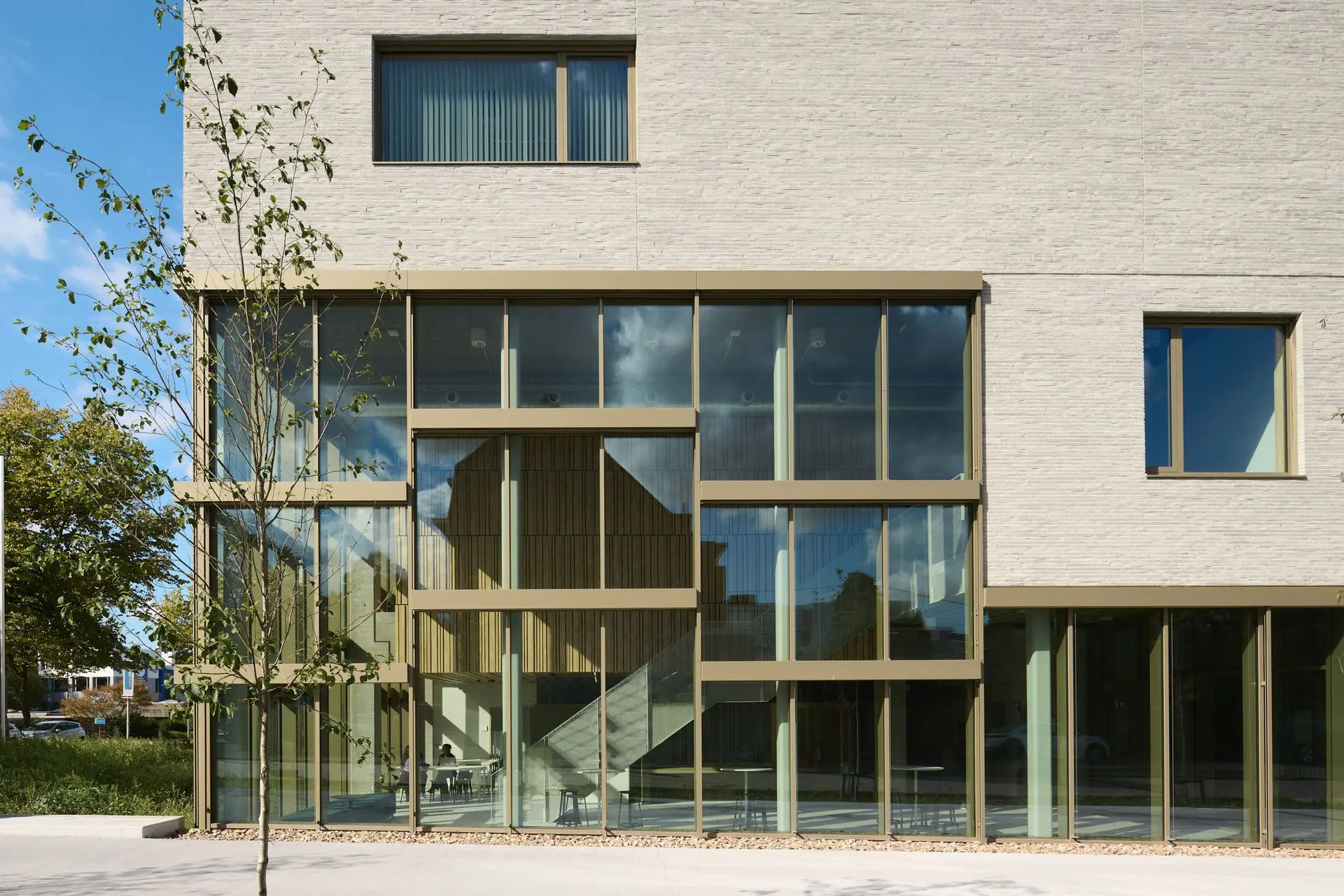
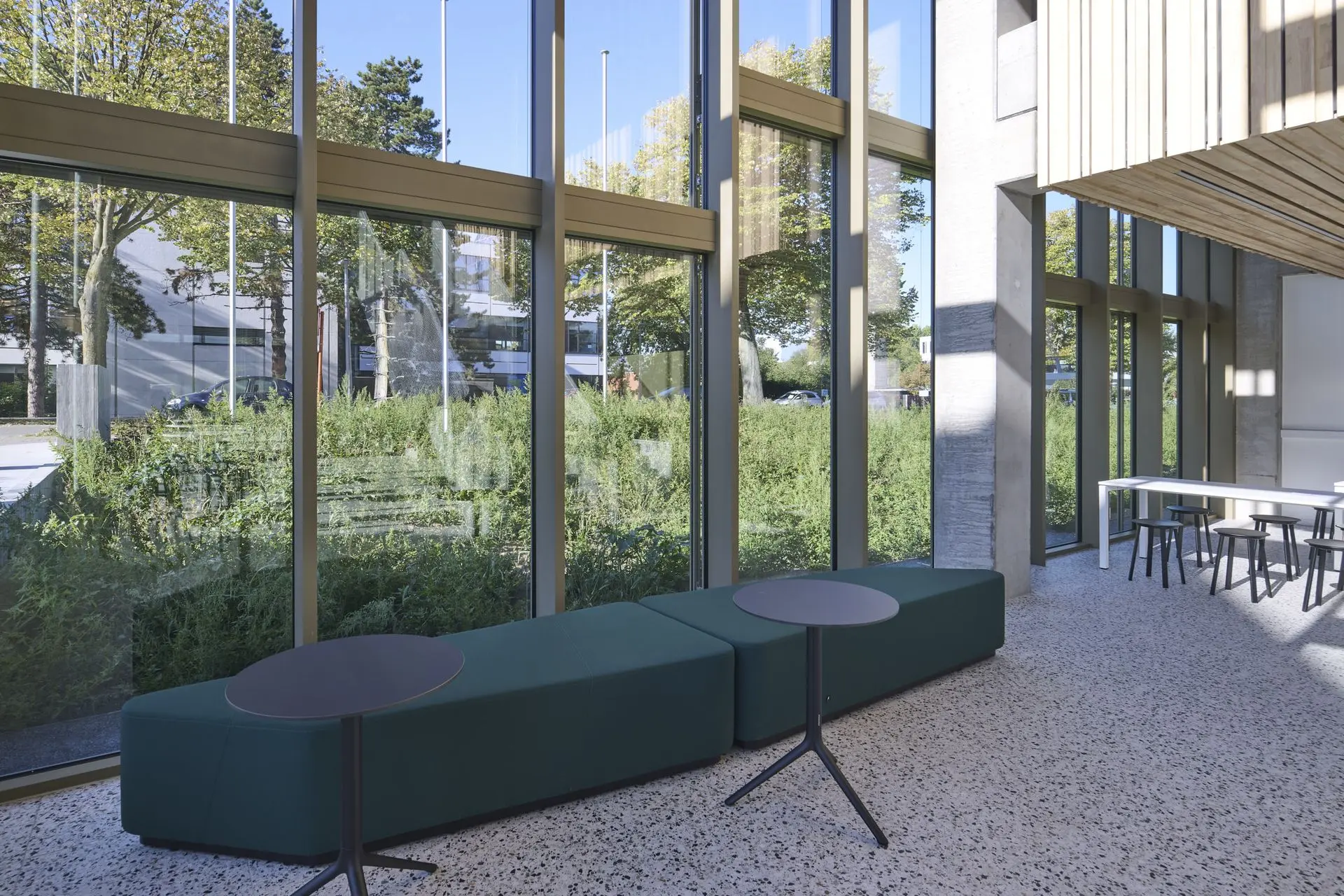
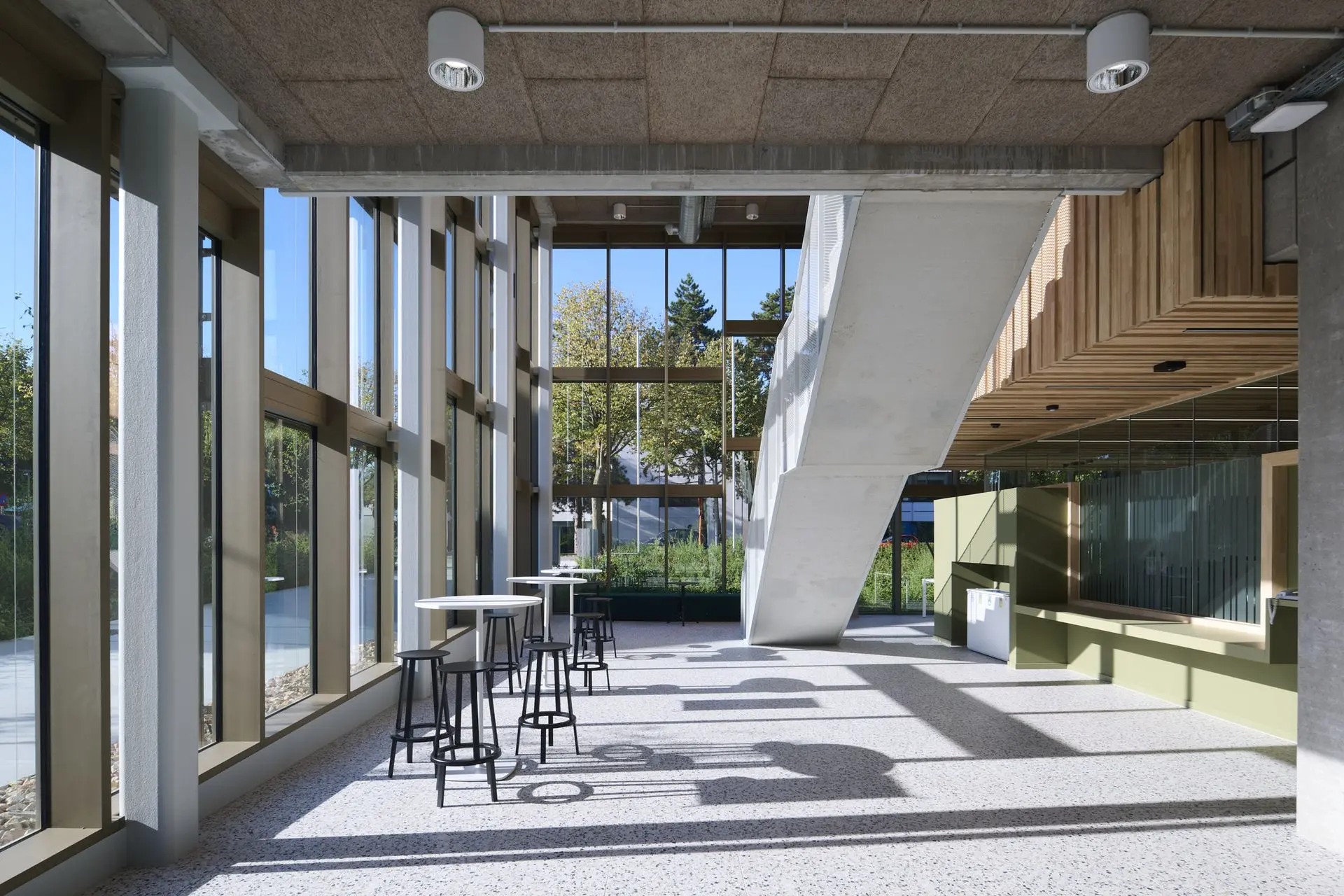
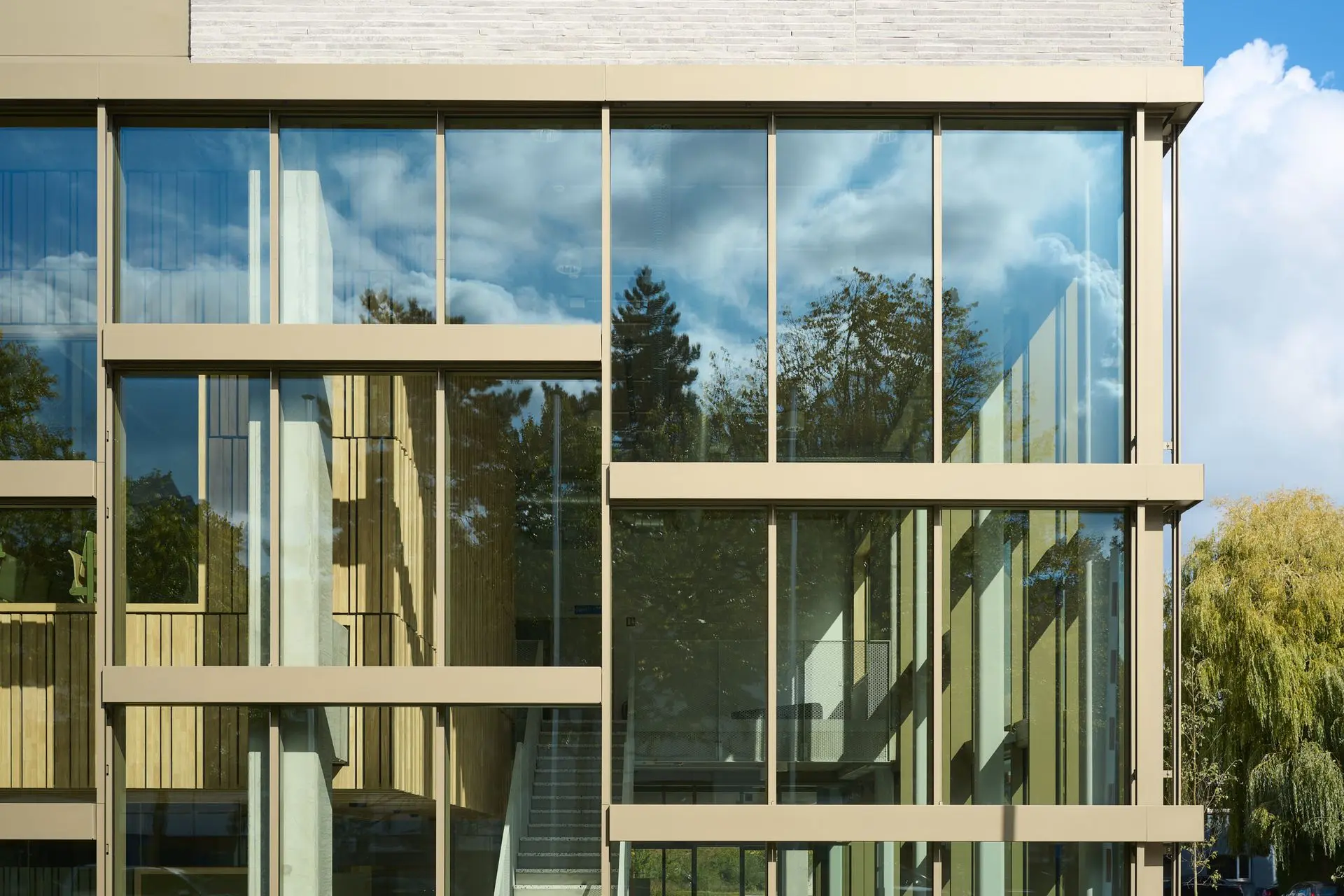
The new central campus building of Ghent University in Kortrijk immediately draws attention. The façade combines robust concrete blocks with a generous glass corner section and refined aluminum joinery in a warm bronze tone. For the aluminum exterior joinery, close collaboration took place with system supplier Aliplast Aluminium Systems and the joinery division of Bekaert Building Company, who jointly handled the technical development of the complex details.
This project was carried out by
Bekaert Building Company
Eugène Bekaertlaan 51, 8790 Waregem
056 68 90 91
A powerful interplay of form, function and finesse
KUBES, short for Kortrijk UGent Building for Engineering Studies, is much more than just a name. It reflects both the building’s purpose and the striking cubist forms that define its architecture: a technical masterpiece featuring glass panels up to 7.7 meters high and meticulous detailing — especially in the aluminum joinery.
This impressive achievement is the result of close collaboration between Abscis Architects, Bekaert Building Company, and Aliplast, the system supplier for aluminium windows and curtain walls.
A building like a Jenga tower
KUBES was designed with future growth and flexibility in mind. “We wanted to create a compact, cube-shaped building that occupies only 65% of the site, leaving room for expansion,” says Markus Hanssens, architect at Abscis Architects. “The strategic placement of elevators and corridors makes future extensions easy.”
The design references a Jenga tower: a dynamic stacking of blocks that slide in and out of the grid. These shifts create deep recesses, terraces, and sightlines that bring in light and air. The double-height foyer with Aliplast curtain wall reinforces this sense of openness and transparency.
Materialisation: robust and refined
The façade is constructed from raw concrete blocks, giving the building a tangible, robust appearance. For the aluminum joinery, Aliplast’s Middle Light Bronze (8MM32T) lacquered anodisation was chosen. “We didn’t want a stark contrast with the grey concrete, but rather a warm, nuanced touch,” explains Hanssens. “This finish looks more robust and authentic, and better matches the building’s overall character,” Hanssens adds.
Initially, anodised aluminum was considered for the exterior joinery, but that idea was ultimately abandoned. Why? The risk of colour variation between different production batches was too high, posing a threat to the building’s visual uniformity. That’s why lacquered anodisation was selected — a finish that not only ensures more consistent color rendering but is also more budget-friendly.
In terms of colour finishes, Aliplast offers an exceptionally broad and refined range. The powder coating collection was recently expanded with the Natural Touch series, which combines natural textures with a soft appearance, and the Ano Lux line, which mimics the look of anodised aluminum while offering the benefits of powder coating. Each colour variant is classified into a specific category, linked to a warranty period ranging from fifteen to twenty-five years — a unique offering in the sector, compared to the standard ten years. End customers benefit from improved colour and gloss stability, enhanced scratch resistance, better UV protection, longer weather durability, and increased resistance to harsh environments and extreme weather conditions.
Top-level engineering
The greatest technical challenge? The 7.7-meter-high curtain wall at the corner of the building — without any intermediate support points. To achieve this, the slim-profile MC55 curtain wall system from Aliplast was selected. “Initially, we considered internal reinforcement, but ultimately opted for single-sided clamping with special steel anchors,” explains the project lead at Bekaert Building Company. “This provided greater stability and a more elegant façade appearance.”
The close collaboration between Alexander Morel, project support manager at Aliplast, the contractor BBC, and Abscis Architects resulted in a tailor-made solution. The eight-meter extrusion lengths — instead of the usual seven — the sloped bottom profile, and the alternating rhythm of mullions and transoms required special attention. The result is a vibrant façade, but it demanded an exceptional level of detailing in the aluminum finish. Alexander Morel reflects: “KUBES served as the pilot project for our new MC55 curtain wall system. The insights we gained during this process translated into concrete improvements: more efficient production and installation workflows, stronger wind and water resistance, enhanced safety in line with RC2 and RC3 standards, and greater structural load capacity.”
Sleek, fast and smartly installed
Alexander elaborates: “With the MC55, Aliplast is launching a completely new curtain wall system that responds to today’s demands for aesthetics, efficiency, installation flexibility, performance, and sustainability. The MC55 is not just an upgrade of our existing façade systems. We thoroughly re-evaluated the entire curtain wall concept: what are the future needs of the market, what can be optimized? Over the course of two years, we developed and tested the system to meet the strictest standards in wind and water tightness, burglary resistance, acoustics, and load-bearing capacity. At every stage of development, we focused on creating a more efficient production and installation process for our partners.
The result is the new MC55: its name refers to the slim 55 mm view width. This sleek look scores high on aesthetics while allowing for heavy glass weights—spans of up to 7 meters are no longer an obstacle. The MC55 can be executed in two ways: either a straight cut or a stepped cut version. We are currently launching the MC55 and the more insulating MC55 Passive, but we’re not stopping there. We are actively developing additional versions: the highly insulating MC55 Passive+, the fire-resistant MC55, and the MC55 Glass, which enables the creation of visually all-glass facades.”
Conclusion
With KUBES, Aliplast proves that aesthetics and engineering can go hand in hand. The result is a building that not only makes a strong visual impression but also excels technically — a true showcase of contemporary architecture and construction.